
Do you know whether your lifting equipment is safe to use and legally compliant? Not understanding LOLER could put your workers, your business, and your property at risk. But what does LOLER stand for, what equipment is covered by LOLER, and what does your business need to do to stay compliant?
LOLER stands for the Lifting Operations and Lifting Equipment Regulations 1998, a UK health and safety law. It sets rules to ensure lifting equipment used at work is safe, suitable for its purpose, and properly examined to protect workers from harm.
Read the full blog to understand which lifting equipment falls under LOLER, how often it needs to be examined, and what you need to do to keep your workplace safe.
What Is LOLER and Why Does It Matter?
The ‘Lifting Operations and Lifting Equipment Regulations 1998′ (LOLER) make lifting safer. They safeguard employees against injuries. It also minimises risks associated with using lifting equipment in the workplace.
LOLER is a legal requirement to protect goods and workers. It generally applies to lifting equipment that businesses and organisations own, hire, use, or control at work. You can use it for lifting activities in construction, manufacturing, warehousing, healthcare, agriculture, or other industries.
Why does it matter? A broken crane, damaged sling, or poor lift planning can result in dropped loads, severe injury, death, and business loss.
What Equipment Is Covered by LOLER?
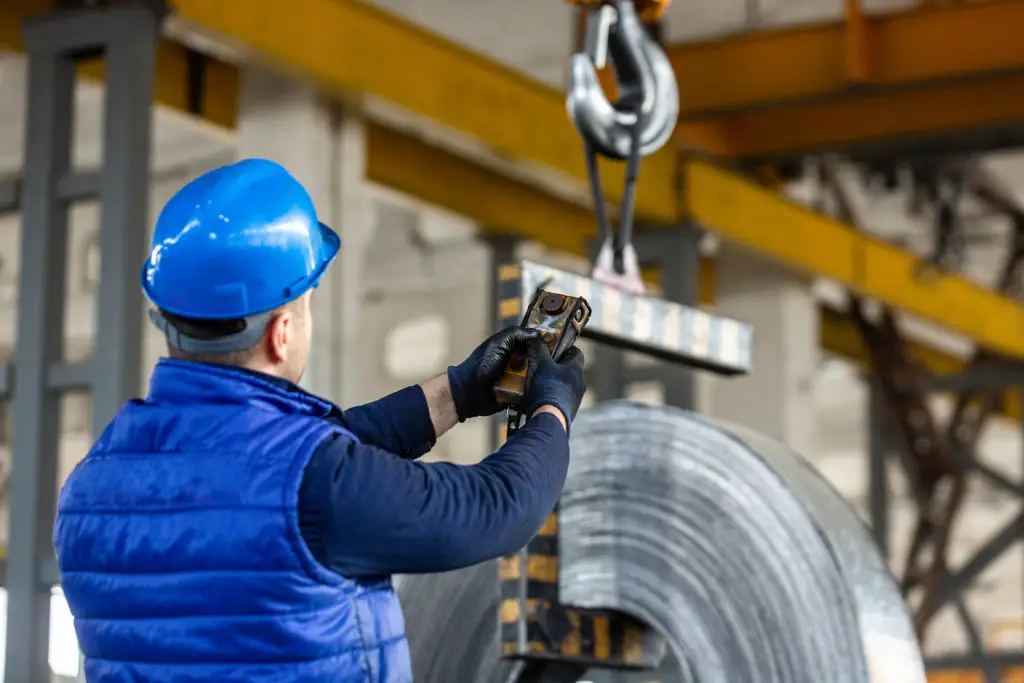
If equipment’s main purpose is to lift and lower loads, it is considered lifting equipment. But what equipment is covered by LOLER?
If your business uses lifting equipment such as a tower crane on a construction site, a forklift in a warehouse, a passenger lift in a building or a hoist lifting a patient, you’re dealing with lifting equipment covered by LOLER.
The 4 Key LOLER Rules Every Business Should Know
Every business should know 4 key LOLER rules to ensure the safety of employees and materials. These points are Strength and Ability, Proper Planning and Supervision, Clear Markings, and Thorough Examination and Inspection.
- Strength and Ability: Equipment and accessories must be strong and stable to carry and attach loads.
- Proper Planning and Supervision: An experienced, supervised, and competent person must plan all lifts properly.
- Clear Markings: Lifting Equipment and Accessories must be clearly marked with their Safe Working Load and key usage limits.
- Competent Person: Must inspect and thoroughly examine equipment and maintain records.
LOLER Inspection Frequency: 6-month and 12-month Rules
Knowing LOLER but not knowing the 60- and 12-month rules can be a direct violation, and you can’t risk it. According to the Health and Safety Executive, 6- and 12-month LOLER inspections are equally important.
- 6-Month Rule: Inspect equipment that lifts people or accessories every 6 months, and keep inspection records, to avoid accidents and hazards. Examples include passenger lifts, hoists used to lift workers, and lifting accessories used to attach loads to cranes or other lifting equipment.
- 12-Month Rule: Inspect equipment that lifts anything every 12 months, and keep inspection records to avoid potential hazards. Examples include passenger lifts and equipment used to lift people or goods only.
Equipment may also need regular checks between its 6- or 12-month thorough examinations.
How to Choose the Right Lifting Equipment for the Job?
Choosing the right equipment isn’t just about finding something that can lift the required weight. Organisations must consider whether the equipment suits the entire lifting operation.
Before choosing equipment, ask yourself:
- What are you lifting?
- How high and how far does the load need to move?
- Where will the lifting operation take place?
- Is the equipment suitable for lifting people?
- Does the equipment have enough capacity?
Choosing the right equipment reduces risk, improves efficiency, and helps businesses meet their legal responsibilities.
Who Is a Competent Person Under LOLER?
A competent person should understand both the practical and theoretical aspects, be properly trained, and be responsible for performing the task safely.
The competent person who carries out thorough examinations and inspections under LOLER must be competent, properly trained, able to make impartial decisions, and experienced in operating lifting equipment.
A competent person is not necessarily someone who has worked with lifting equipment for many years. They need to be competent to conduct the specific examination and make sound safety decisions.
From Cranes to Chains: What LOLER Covers
LOLER covers a broad range of lifting equipment and accessories across industries. But people often confuse equipment with accessories.
Lifting equipment lifts and lowers loads, while lifting accessories attach to the equipment and can be used as an anchor, for fixing, or to support it. Examples of lifting equipment include cranes, gin wheels, goods lifts, and dumb waiters.
Lifting accessories include slings, chains, harnesses, ropes, and magnets. It’s also crucial to know which lifting accessories to use with the equipment.
How to Plan a Safe Lifting Operation
A safe lifting operation begins before you turn on the equipment and remove the load from the ground.
Here’s how you can plan a safe lifting operation:
Step 1: Keep track of the load.
Determine its weight, shape, centre of gravity and special handling requirements.
Step 2: Select suitable equipment.
Select equipment and accessories of an adequate capacity and design for the task.
Step 3: Monitor the work area.
Inspect ground stability, overhead hazards, nearby structures, restricted areas and any persons that could be affected.
Step 4: Assign competent people.
Ensure operators, supervisors and others involved in the lift operation possess the necessary skills and knowledge.
Step 5: Establish communication.
Everyone should know what they are responsible for and how signals/communications will be used during the lift.
Step 6: Regulate the lifting area.
Direct people away from danger areas and suspended loads.
Step 7: Carry out the lift safely.
Follow the plan, monitor what’s happening, and stop the operation if anything changes or becomes unsafe.
Step 8: Lower and secure the load.
Before unloading lifting accessories, ensure the load is in a safe and stable position.
How Often Should Lifting Equipment Be Inspected
Businesses and organisations often confuse inspection with an examination. A competent person carries out a thorough examination under LOLER. They examine lifting equipment and parts of the equipment that are important to safety.
Inspection ensures that there are no defects or damage. Inspections may be required between exams, depending on the risks and type of equipment used. It helps determine when inspections are needed in that context.
Maintenance is carried out to ensure equipment is in good working condition, through servicing, repair and other activities. It is used alongside equipment condition, inspection, and thorough examination.
Conclusion
Understanding which equipment LOLER covers is the first step toward a safer workplace. But knowing the rules isn’t enough. Ensure your equipment is safe, plan your lifting operations well, and protect your workers.
Not sure whether your lifting equipment complies with regulations? Review your equipment, inspection records and lifting procedures today to identify risks, stay compliant and prevent avoidable accidents.
Frequently Asked Questions
Yes. A skilled person can suggest intervals longer than 12 months. This depends on the equipment’s condition, how it’s used, the risks involved, and its past exam history. The intervals must be appropriate and documented in written records